Investing is as much a psychological challenge as it is a financial endeavour. While markets fluctuate and trends shift, the decisions investors make are often more influenced by emotion than by logic.
Fear during market downturns and overconfidence during bullish rallies can drive irrational actions, leading to missed opportunities or unnecessary losses. One strategy that has gained attention for helping investors navigate these emotional pitfalls is Dollar-Cost Averaging (DCA).
By focusing on consistency rather than timing the market, DCA provides a disciplined approach that leverages the psychology of human behaviour for long-term investment success.
Understanding Dollar-Cost Averaging
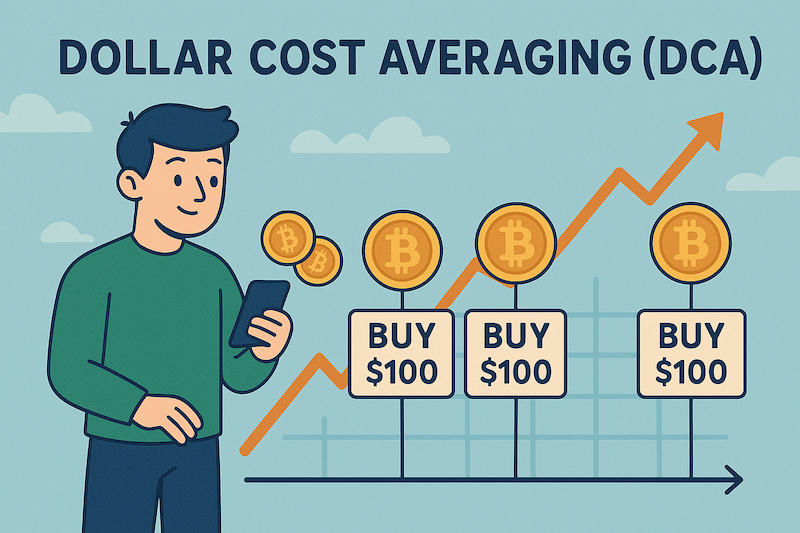
Dollar-Cost Averaging is an investment strategy where an individual invests a fixed amount of money at regular intervals, regardless of market conditions.
Instead of trying to predict market highs or lows, the investor commits to a routine, purchasing more shares when prices are low and fewer shares when prices are high. Over time, this approach can help smooth out the effects of volatility and reduce the risk associated with making large lump-sum investments at the wrong moment.
The beauty of DCA lies in its simplicity. Investors do not need to be experts in market timing or financial forecasting. By establishing a structured plan and adhering to it, they can remove the emotional component that often undermines investing decisions. This method is particularly appealing for novice investors who may feel intimidated by the complexity of financial markets, as well as seasoned investors seeking a steady approach to long-term growth.
The Emotional Trap of Market Timing
Human psychology often leads investors to make decisions based on emotion rather than reason. During market downturns, fear can cause panic selling, locking in losses instead of holding onto investments for potential recovery.
Conversely, in booming markets, greed may drive overinvestment, resulting in inflated risks and potential future regret. The desire to “buy low, sell high” can paradoxically lead to buying high and selling low, which undermines long-term wealth accumulation.
DCA addresses this behavioural bias by creating a disciplined framework. Since the strategy involves investing a fixed amount consistently, decisions are less influenced by temporary market sentiment.
Over time, this regularity helps investors avoid reacting impulsively to short-term price swings, fostering a mindset that prioritises steady growth and long-term goals over immediate gratification.
Psychological Benefits Beyond Returns
Beyond its financial advantages, DCA offers substantial psychological benefits. Investors gain a sense of control and predictability, which can reduce anxiety and encourage long-term commitment. By establishing a routine, the process becomes almost automatic, freeing the investor from the constant stress of analysing market movements or making reactive decisions.
Consistency also cultivates patience—a critical psychological trait for successful investing. Many individuals struggle to hold investments during downturns, succumbing to the temptation to sell prematurely. DCA reinforces the idea that investing is a marathon, not a sprint, encouraging a long-term perspective that can ultimately lead to more stable and sustainable growth.
Aligning Strategy with Goals
Implementing DCA effectively requires clarity about financial goals and risk tolerance. It works best when the investment horizon is long-term, allowing the strategy to smooth out market fluctuations over time. Short-term investors or those with highly specific liquidity needs may need to adjust the approach or combine it with other strategies to meet their objectives.
Additionally, DCA can be tailored to different asset classes, such as equities, bonds, or exchange-traded funds (ETFs). The key is to maintain a consistent investment schedule and avoid the temptation to alter contributions in response to short-term market noise. For investors seeking more information on structuring a disciplined approach to DCA, they can see it here. This guide provides practical insights on how to leverage DCA during periods of market volatility and maintain a psychologically balanced investing mindset.
Overcoming Common Misconceptions
Despite its simplicity, some investors view DCA as a suboptimal strategy compared to lump-sum investing. It is true that in steadily rising markets, lump-sum investments may yield slightly higher returns.
However, DCA’s strength lies in reducing risk and supporting behavioural discipline. The method emphasises gradual accumulation, risk management, and the avoidance of emotionally driven mistakes. For many investors, these benefits outweigh the potential difference in absolute returns, particularly when navigating volatile markets.
Another misconception is that DCA is passive or requires minimal attention. While it simplifies the decision-making process, investors should still periodically review their portfolio to ensure it aligns with evolving goals and risk tolerance.
Rebalancing, adjusting contributions, and evaluating asset allocation are complementary practices that enhance the effectiveness of DCA over the long term.
Conclusion
In conclusion, the psychology of investing often presents greater challenges than the markets themselves. Strategies like Dollar-Cost Averaging offer a practical, psychologically informed approach that aligns with human behaviour, mitigates emotional pitfalls, and fosters consistent, disciplined investing.
By prioritising consistency over emotion, investors can unlock the potential of long-term growth while cultivating confidence, patience, and resilience—qualities that are invaluable in both investing and life.